
10 Major Problems that Should be Avoided in Refractory Brick Masonry
- rsrefractory
- Sep 13
- 2 min read
If refractory bricks are not laid in strict accordance with construction specifications, they may fall off or become loose during operation, affecting the overall service life and stability of the kiln. There are many types of refractory bricks, and the following are some issues that should be avoided when laying refractory bricks.

Misalignment
During the laying process of refractory bricks, the top and bottom of the bricks must be kept even. Avoid severe misalignment, which can affect the overall strength and durability of the bricks. Therefore, ensure that the bricks are aligned and arranged neatly during laying to avoid misalignment.
Tilt
During laying, the bricks must be parallel to the axial direction to avoid tilting or misalignment. Severe tilting can cause the entire kiln to collapse, so avoid tilting or misalignment.

Slope
In circular masonry, unevenness along the circumferential surface, also known as slope, can affect the quality and aesthetics of the masonry. Limiting unevenness to within 1 meter helps maintain the overall flatness of the masonry.
Misalignment
Misalignment between the brick ring and the core should be avoided. Misalignment can lead to structural instability, potentially affecting its load-bearing capacity and service life.
Gap
Gap is defined as a joint that is smaller on the inside and larger on the outside. This irregularity should be avoided. Gap affects the overall seal and aesthetics, thus impacting the service life of the kiln. Ensure that the joints are consistent and tight.
Voids
Voids are defined as gaps between bricks. This can cause structural instability and compromise overall strength and durability. Ensure that the refractory mortar is properly filled during the masonry process to prevent gaps.

Serpentine
Wavy curvature in radial and circumferential joints can affect overall aesthetics and sealing. Ensure straight and regular joints to avoid serpentine curvature.
Inverted Bricks
Inverted bricks, where the top and bottom are reversed, can affect overall structural stability. Ensure bricks are properly aligned to avoid this error.
Severely Chipped Corners and Chipped Edges
Severely chipped corners or chipped edges in masonry can reduce its aesthetics and strength. Ensure bricks are intact and complete.
Masonry Bulging
Bulging in the masonry may be caused by equipment deformation or improper cleaning of the inner surface of the cylinder. Bulging affects the flatness and stability of the masonry, preventing furnace explosions during subsequent use.
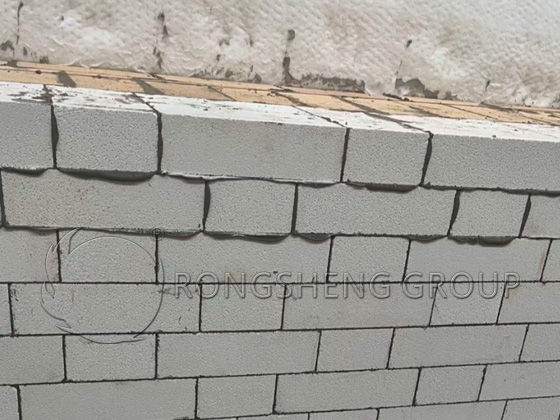
Rough Joints
Rough joints caused by exposed iron plates, unapplied fire mortar, or unclean brick surfaces can affect the overall seal and appearance. Ensure the masonry surface is smooth and clean.
Mortar Mixing
Strictly control the use of mortar to avoid using the wrong type of mortar and ensure the correct type of refractory mortar to ensure a strong bond and durability.
The above are some issues that should be avoided when laying refractory bricks. If any of these issues occur during construction, they should be addressed promptly, and strict construction standards must be adhered to. This will prevent problems such as bricks falling, loosening, and cracking during kiln operation, which can affect the overall lifespan and stability of the kiln. Therefore, strict adherence to construction standards will ensure effective function.
Comments